
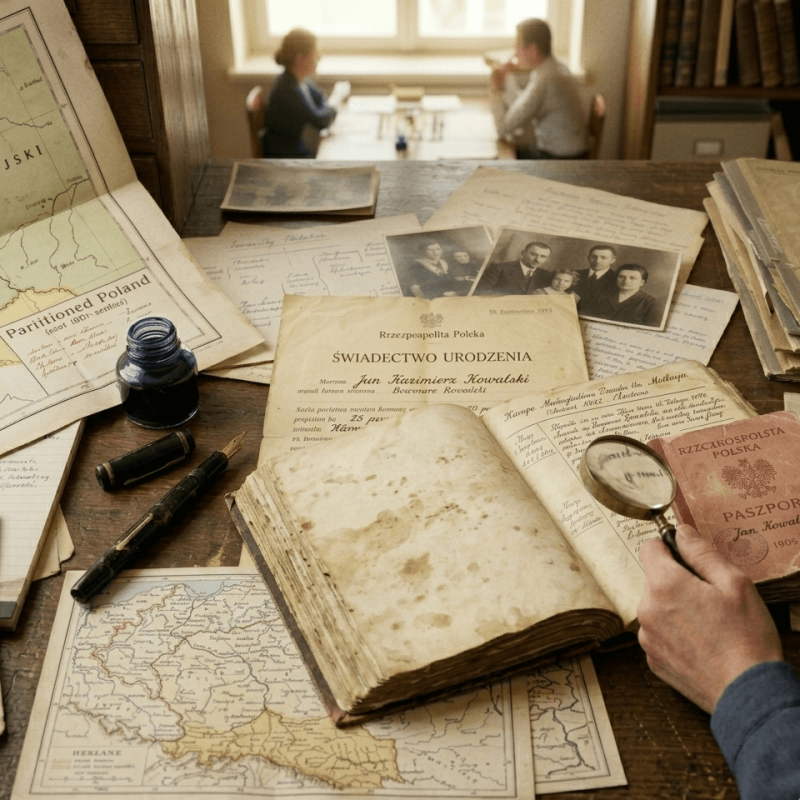
Researching your Polish ancestry can be both exciting and challenging. Many families with roots in Poland have discovered that tracing their heritage requires patience, careful investigation, and an understanding of how historical records are organized.
Over the past centuries, Poland experienced major political and territorial changes. Borders shifted, records were written in multiple languages, and many documents were moved between archives. Because of this, genealogical research in Poland often involves searching through records across different institutions and historical periods.
However, with the right approach and reliable sources, it is possible to uncover valuable information about your ancestors. This guide explains the main steps involved in Polish genealogy research and how to locate the records that connect you to your family’s past.
Start With What Your Family Already Knows
Every genealogy project begins with the information you already have. Even small details shared by relatives can provide important clues that lead to historical records.
Start by speaking with parents, grandparents, and other relatives. Ask them about family members who lived in Poland and gather any details they remember.
Useful information may include:
- Full names of ancestors
- Approximate dates of birth
- Towns or villages where the family lived
- Immigration dates
- Religious background
- Stories about life in Poland
Write down everything you learn and begin building a simple family tree. Organizing this information early will make later research much easier.
Look for Clues in Family Documents
If family members cannot remember many details, search through old belongings and documents. Items such as photographs, letters, and certificates may contain important clues.
Look for:
- Immigration documents
- Birth, marriage, or death certificates
- Old passports
- Military documents
- Family prayer books
- Letters or postcards sent from Poland
Sometimes a photograph or letter may include the name of a town or parish. Even a small clue like this can significantly narrow your search.
Research Records in the Country of Immigration
For many families with Polish ancestry, the next step is researching records in the country where ancestors settled. This is especially common for people whose relatives immigrated to the United States, Canada, the United Kingdom, or Australia.
Immigration-era records often contain valuable details about a person’s place of origin in Poland.

Census Records
National census records are often one of the easiest places to start. These records typically list:
- Names of family members
- Ages
- Birthplaces
- Immigration years
In many cases, census documents may simply state “Poland.” However, other entries might list historical regions such as Russia, Austria, or Prussia, reflecting the political situation of Poland during that time.
Immigration and Passenger Lists
Passenger arrival records can sometimes identify the last residence or hometown of an immigrant.
For example, records from Ellis Island or other ports often contain information such as:
- Town of origin
- Province or region
- Name of a relative remaining in Poland
This information can be crucial for identifying where to continue research in Polish records.

Naturalization Records
Naturalization documents can be even more helpful because they sometimes list the exact birthplace of the applicant.
For example, a naturalization file may include entries such as:
- “Kielce, Poland”
- “Białystok, Poland”
- “Rzeszów, Galicia”
Once a specific town or village is identified, research in Polish records becomes much easier.
Vital Records in the Country of Immigration
Birth, marriage, and death certificates issued in the country of immigration can also provide important details.
These records may contain:
- Names of parents
- Place of birth
- Maiden names
- Dates of immigration
Together, these documents often provide the missing link needed to identify the correct location in Poland.
Watch for surname changes. “Nowak” might become “Novak” or “Newman”. Same with names, “Jan” could become “John” abroad.
For example, we once traced a client’s grandmother who was listed in the 1910 U.S. Census in Manhattan. The arrival year mentioned in the census led us to a passenger record from Ellis Island, which listed “Rzeszów” as her last place of residence. A naturalization record also named “Rzeszów” as her place of birth, so we continued our research there. Across these records, her year of birth and name varied slightly; however, all other details remained consistent, which helped us connect the records.
Identifying the Correct Town in Poland
One of the most important steps in Polish genealogy research is identifying the exact place where your ancestor lived.
Poland contains thousands of towns and villages, and many share the same name. Without knowing the correct location, searching for records becomes extremely difficult.
Additionally, many small villages did not maintain their own records. Births and marriages may have been registered in:
- A nearby town
- A parish church
- A district administrative office
Historical changes in borders also mean that the same town might appear in records under different languages, including Polish, German, Russian, or Latin.
Searching Polish Records and Archives
Once you know the location of your ancestor’s birthplace, you can begin researching Polish records directly.
The most important sources for Polish genealogy are church records and civil records.
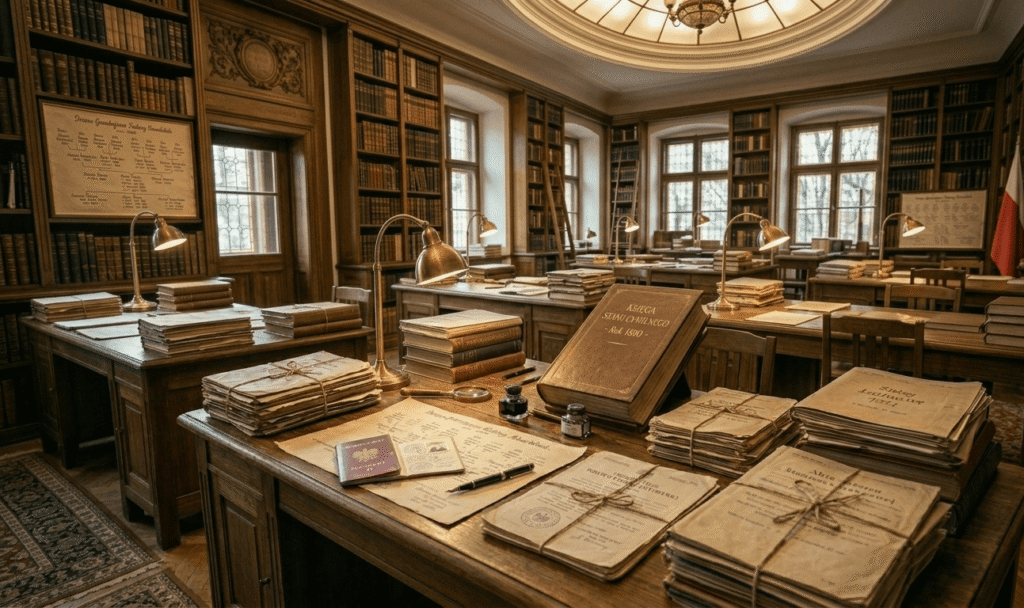
Church Records
Before modern civil registration systems were established, churches recorded most births, marriages, and deaths.
These records are often called parish registers and may exist for several religious communities including:
- Catholic
- Orthodox
- Lutheran
- Jewish
Catholic parish records are the most common in many regions of Poland.
Church registers can often provide detailed family information, including:
- Names of parents
- Names of witnesses
- Places of residence
- Occupations
These records can sometimes extend back to the 18th century or earlier.
Civil Records
Civil registration began in parts of Poland in the early 19th century and later became standardized across the country.
Civil records are called Akta Stanu Cywilnego (civil status records). These registers contain birth, marriage, and death records similar to modern certificates.
Civil records typically include:
- Full names
- Dates and places of birth
- Parents’ information
- Witnesses
For genealogists, these documents are often extremely valuable because they contain detailed family relationships.

Using Online Polish Genealogy Resources
Many Polish archives have begun digitizing Polish genealogy records, making it easier to conduct research online.
Several major databases provide access to digitized records or archival indexes.
Common resources include:
- Szukaj w Archiwach – the official Polish archive database
- FamilySearch – a large international genealogy database
- JewishGen and JRI-Poland – useful for Polish-Jewish ancestry
These platforms may include:
- Scanned parish registers
- Indexed birth records
- Archival catalogs showing which records exist for a particular town
However, not all records have been digitized. Many documents still exist only in local archives or parish collections.
When Professional Genealogy Help May Be Useful
Polish genealogy research often requires navigating historical archives, language differences, and complex record systems.
If you are unable to identify the correct town of origin or locate the necessary records, working with experienced researchers may help move the search forward.
Professional genealogy specialists can assist with:
- Archival searches in Poland
- Locating historical birth and marriage records
- Identifying the correct parish or registry office
- Gathering documents required for Polish citizenship confirmation
Drevo Research focuses on Eastern European archival research and regularly assists families in locating historical records needed for genealogy and citizenship documentation.