
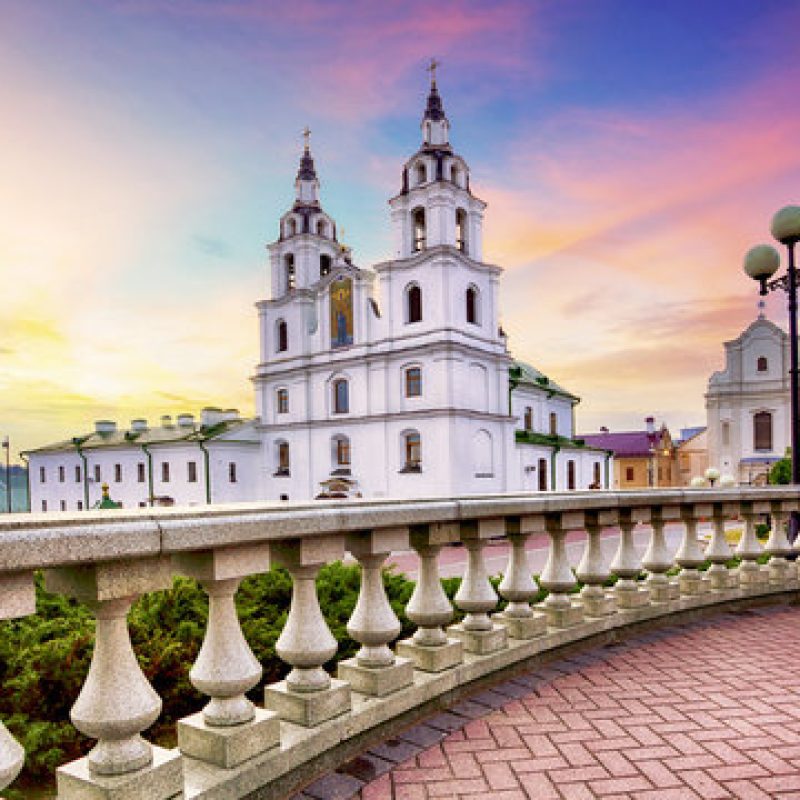
Researching your Belarusian ancestry can feel like unraveling a captivating yet tricky mystery—some clues have faded, names may twist across borders, and records lie buried in Eastern European archives.
Whether your family departed during the Russian Empire, Soviet times, or more recent decades, piecing together their past is absolutely doable with a solid plan.
At our agency, we’ve helped numerous families rediscover their Belarusian heritage, and this detailed guide walks you through the process, step by step.

Stage 1: Gather Initial Information
Every family history search kicks off with what you already know—or what’s lingering in your family’s tales. Your first task is to gather as much detail as possible about the ancestor you’re tracing, as these nuggets will steer you toward the right records later. Begin by chatting with your closest relatives—parents, grandparents, or even great-uncles and aunts. Ask them to share whatever they recall, from full names to fragments of stories about life in Belarus. A hint about a nearby river, a market town, or a journey abroad could unlock a lead. Jot it all down carefully, sketching a basic family tree or timeline to stay organized.
Focus on the essentials: full names (including patronymics like “Ivanovich”), birthplaces, approximate birth or immigration dates, and any regional connections. These are the foundation of your research.
If relatives are quiet or no one’s left to ask, dig into what’s at home. Flip through old photos—check the backs for notes like “Minsk, 1925” or a relative’s name. Sift through letters, postcards, or Soviet documents that might have survived. We once found a breakthrough for a client when we spotted a photo of their great-grandmother outside a Brest synagogue in a forgotten album. Reach out to distant cousins or online groups tied to your surname for extra clues—every bit helps.
Stage 2: Online Research (Country of Immigration)
Many families we work with have Belarusian ancestors who moved to countries like the U.S., Canada, or Argentina in the late 1800s or early 1900s. In this step, we’ll focus on how to research ancestors in those places—but the same methods apply if your relatives moved elsewhere.
Once you’ve collected your basic family details, it’s time to use one of the most helpful website: Ancestry.com. It has many records that can help you learn what happened after your ancestors arrived and sometimes even trace their exact place of origin. Ancestry.com provides free trial.

Look for these types of records:
- Census Records – These are population lists taken regularly. U.S. censuses, for example, show names, ages, family members, and birthplace
- Immigration Records – Passenger lists from ports like Baltimore or New York may show your ancestor’s hometown or region.
- Naturalization Records – These are citizenship documents. They often include the exact place or area of birth, like “Vitebsk, Russian Empire,” which is very useful for the research.
- Vital Records – Birth, marriage, or death certificates can also give clues about where someone was born.
- Military Records – World War I or II draft cards might mention a hometown too.
The main goal here is to find out exactly where in Belarus your ancestor came from. That’s the detail that unlocks further research. Try to connect what you find in the records with your family stories.
Don’t worry too much if small details change between documents—ages can be off by a few years, and places might be listed as “Russia,” “Poland,” or “Lithuania,” depending on the time period. Look for repeating patterns to confirm you’re tracking the right person.
If you can’t find citizenship documents, a last residence (like “Slutsk” or “Pinsk”) from an immigration record can still help a lot. You can also try FamilySearch.org (free) or MyHeritage for more records.

Be aware that names often changed. A surname like “Nusanowitz” might become ““Nusan”. In one case, we traced a man listed as both “Mikola” and “Nick” in different records.
By the end of this step, you should know the name of a town, region, or district in Belarus. That’s the key to moving on to the next stage.
Stage 3: Back in Belarus
Now that you’ve found where your ancestors came from, it’s time to look for records in Belarus itself. This part of the world has been through a lot—at different times, it was part of the Russian Empire, Poland, the Soviet Union, and is now an independent country. That history affects which records are available and where they’re stored. In this guide, we’ll focus on the earlier period (before 1917).

Here are the most important types of records to look for:
- Church Records (Метрычныя Кнігі) – These include births, marriages, and deaths.
- Revision Lists (Рэвізскія Сказкі) – These were tax lists made by the Russian Empire between 1718 and 1858. They listed families by household.

Not sure where to look? Our agency offers a free database of over 100 genealogy links for Eastern European countries, including former Russian Empire territories—join today to access this resource.
What to expect from the archives:
Not all records survived. Revolution, was and German occupation influenced a lot the availability of the records. Some regions were luckier, so finding records will be easier.
If you can’t find digital records, your next step is to contact an archive that is located in the area of your interest. These requests need to be made in Belarusian or Russian and usually cost $40 to $120. Our agency can assist you with contacting archive or finding a local researcher. We work with many experts from Belarus who help our client obtaining relevant records.
A few challenges to keep in mind:
- Payments can be tricky due to Belarus’s current situation—but we can help with that.
- Languages can vary—records might be written, for example, in Russian or Polish. We often help clients translate these documents.
It takes some effort, but don’t give up. Many clients have found long-lost relatives or confirmed family stories once they accessed records in Belarus.
Conclusion
Tracing your Belarusian roots can be a meaningful and rewarding journey. Along the way, you might run into challenges—like missing records or documents in unfamiliar languages—but they can be overcome. Our team has helped many people work through these issues and uncover their family histories. You’re not just collecting names—you’re bringing your ancestors’ stories back to life.