
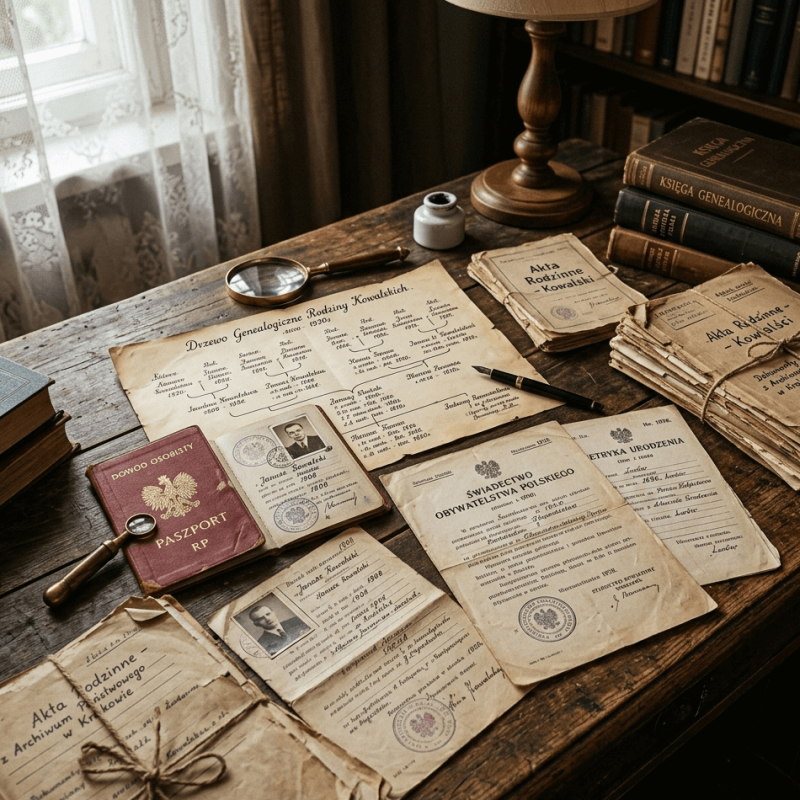
Many people around the world have Polish ancestry but are unsure whether they can get Polish citizenship by descent. If your parent, grandparent, or great-grandparent was a Polish citizen, you may already be a Polish citizen yourself.
Understanding how to get Polish citizenship through descent is not about gaining a new nationality. It is about confirming a legal status you may have had since birth. Polish law follows the ius sanguinis rule. This means a child can get citizenship from a parent, no matter where the child is born.
For descendants of Polish ancestors who emigrated to countries such as the United States, the United Kingdom, Canada, Australia, or Israel, the process typically involves submitting an application for confirmation of possession of Polish citizenship.
This guide explains Polish citizenship by descent. It covers who may be eligible for Polish citizenship. It lists required documents. It also explains the confirmation process.
Understanding Polish Citizenship by Descent
Polish citizenship law is based on the principle of ius sanguinis, or the “law of blood.” Under Polish law, citizenship is inherited from a Polish parent rather than determined by place of birth.
Under this rule:
- A child automatically acquires Polish citizenship at birth if at least one parent is a Polish citizen.
- This applies regardless of whether the child was born in Poland or abroad.
- Citizenship continues through generations unless it was legally lost at some point.
Because of this legal framework, many descendants of Polish emigrants already possess Polish citizenship without realizing it.
Instead of applying for citizenship, most applicants complete a legal procedure known as confirming Polish citizenship. This administrative process verifies that your citizenship has existed since birth through your ancestral line.
Who Is Eligible for Polish Citizenship by Descent?
Eligibility depends on proving an unbroken chain of Polish citizenship from your ancestor to you.
You may qualify if:
- At least one of your parents was a Polish citizen when you were born
- You can prove that your parent, grandparent, or great-grandparent held Polish citizenship
- Citizenship passed through each generation without interruption
For example, your grandfather may have been born in Poland. He may have kept Polish citizenship when your parent was born. If so, you may qualify too.
Millions of people worldwide have Polish ancestry. Their Polish ancestors emigrated in the late 1800s and early-mid 1900s.
The Importance of Citizenship Continuity
Polish citizenship may have been lost historically in certain situations, such as:
- Naturalization in another country during specific historical periods
- Certain types of foreign military service
- Formal renunciation of Polish nationality
If an ancestor lost Polish citizenship before the birth of the next generation, the citizenship chain may be broken.
Careful legal analysis of the family timeline and historical citizenship regulations is often required to determine eligibility.
Documents Required for Polish Citizenship Confirmation
The confirmation process requires documentation proving both your ancestry and your ancestor’s citizenship.

Proof of Lineage and Ancestor’s Citizenship
You must provide official documents showing the family line between you and your Polish ancestor.
These usually include:
- Birth certificates
- Marriage certificates
- Divorce records or death certificates
You must also demonstrate that your ancestor was a Polish citizen.
Examples of supporting documents include:
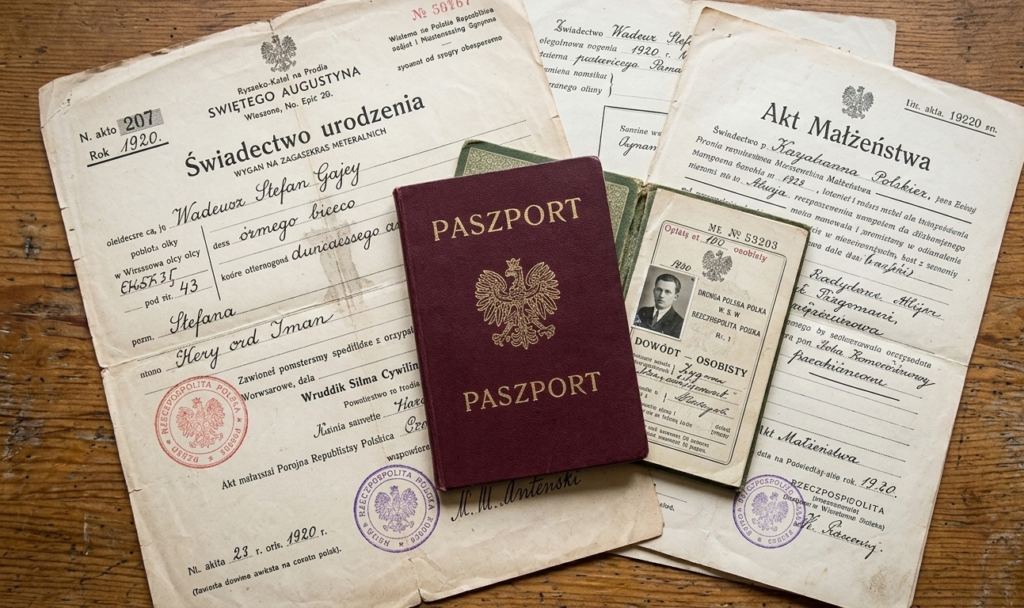
- Historical Polish passports
- Polish identity documents
- Military records
- Census records
- Church or baptismal records
These records help demonstrate that your ancestor was officially recognized by the Polish government as a citizen.
Step-by-Step Process for Confirming Polish Citizenship
Understanding the steps involved can make obtaining Polish citizenship much easier.
1. Identify the Citizenship Chain
Determine which ancestor held Polish citizenship and verify that citizenship passed through each generation.
2. Collect Family Records
Gather all required birth, marriage, and identity documents for each person in the lineage.
3. Locate Historical Evidence
Find documentation proving your ancestor’s citizenship. This often involves searching archives, civil registry offices, or church records.
4. Translate and Legalise Documents
All documents must be translated into Polish and legalised where required.
5. Submit the Application
Applicants living abroad usually submit their documents through a Polish consulate, which forwards the application to the appropriate public office in Poland.
6. Administrative Verification
The relevant authority reviews the case to determine whether the applicant has possessed Polish citizenship since birth.
7. Receive the Decision
If successful, the decision confirms that the applicant is legally a Polish citizen.
Once confirmed as citizens of Poland, applicants may apply for a Polish passport by descent.
How Long Does the Process Take?
Under administrative law, the procedure is intended to take approximately two months.
However, the actual waiting time is often longer because authorities may need to verify historical documents and consult records held by different institutions.
Benefits of Confirming Polish Citizenship
Confirming Polish citizenship offers several significant advantages.
European Union Citizenship
All citizens of Poland are also citizens of the European Union, which provides the right to:
- Residence in Poland and anywhere in the EU
- Travel freely across member states
- Access education and employment opportunities across Europe
Dual Citizenship
Poland allows dual citizenship, meaning a Polish citizen may hold another nationality at the same time.
Finding Ancestral Records for Polish Citizenship
For many families, finding the required documents is one of the most challenging parts of confirming Polish citizenship. Many of the records needed for a Polish citizenship application are historical documents that are stored in archives across Europe.
Another difficulty is that Poland’s borders changed several times during the twentieth century. As a result, records for people born in areas once part of Poland may now be in archives outside Poland. Today, many of these historical records are kept in Polish, Belarusian, or Ukrainian archives.
You can learn more about researching your family history and locating archival records here.

When Professional Genealogy Research Can Help
Many applicants know they have Polish ancestry but struggle to locate the documents needed to confirm citizenship.
If records are missing, professional genealogy researchers can assist with archival searches and document retrieval.
Drevo Research specializes in Eastern European genealogy and archival research. Our team helps clients identify historical records, locate documents in Polish archives, and reconstruct family lines needed for citizenship confirmation. Feel free to contact us.