
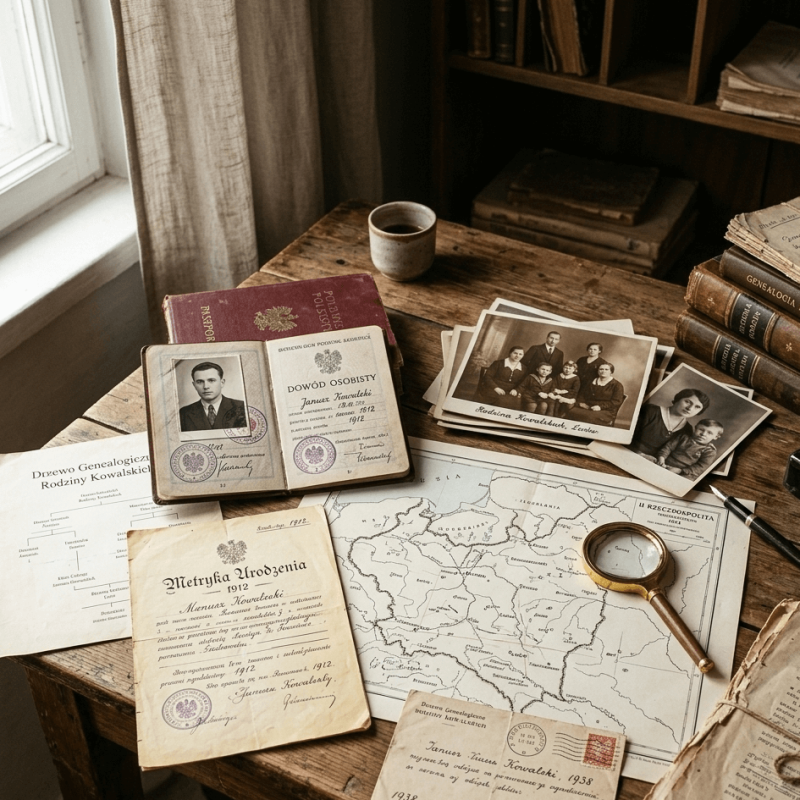
Many people with Polish ancestry are surprised to learn that they may already be Polish citizens by law. Under Polish citizenship legislation, citizenship can pass from parent to child regardless of where the child was born. This principle is known as ius sanguinis, or the “law of blood.”
However, having Polish ancestry does not automatically mean you can immediately obtain a Polish passport. In many cases, individuals must first complete a legal procedure called confirmation of Polish citizenship. This process verifies that a person has held Polish citizenship since birth but lacks official documentation confirming it.
If you are wondering how to apply for Polish citizenship by descent, this guide explains the legal principles, required documents, and step-by-step application process.
For a full overview of eligibility rules, you can also read our guide to Polish citizenship by descent.

Who Can Get Polish Citizenship by Descent
Polish citizenship law is primarily based on ius sanguinis, meaning citizenship is passed through family lineage rather than place of birth.
In general, a person may qualify for confirmation of Polish citizenship if:
- At least one parent held Polish citizenship at the time of their birth.
- They were adopted by a Polish citizen before the age of 16.
- Their Polish ancestor did not lose citizenship before the next generation was born.
Unlike naturalization, this process does not grant citizenship. Instead, it confirms that the person has already been a citizen of Republic of Poland since birth under the law.
Documents Required for the Application
The most important part of applying for Polish citizenship by descent is collecting the correct documentation.
Applicants typically need to provide several categories of records.
Ancestry Documents
These prove the connection between the applicant and their Polish ancestor. Examples include:
- Birth certificates
- Marriage certificates
- Baptism records
- Family civil registry records
These documents establish a clear lineage between generations.
Proof of Polish Citizenship of the Ancestor
Applicants must also demonstrate that their ancestor actually held Polish citizenship. Evidence may include:
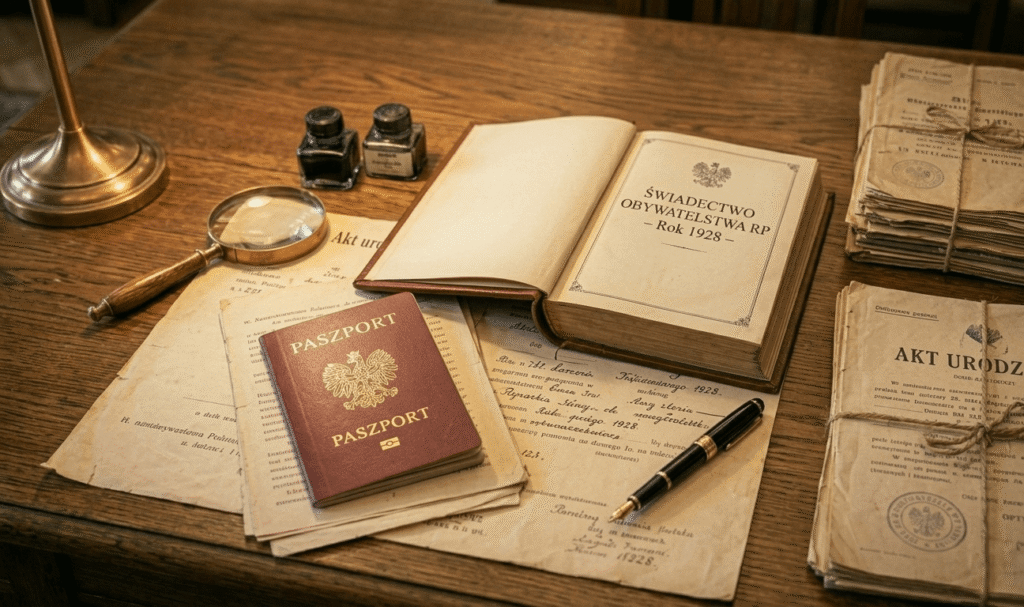
- Old Polish passports
- Polish identity cards
- Military service records
- Official documents listing Polish nationality
Sometimes these records must be located in Polish, Ukrainian or Belarusian archives.
Applicant’s Personal Documents
Applicants must provide their own documentation, such as:
- Full birth certificate listing both parents
- Marriage certificate (if applicable)
- Divorce decree or spouse’s death certificate if relevant
- Valid identity document such as a foreign passport
Translation Requirements
All foreign documents must be translated into Polish. Translations must be completed by a sworn translator or a Polish consulate.
Step-by-Step Application Process
Once the necessary documents have been collected, the formal application process can begin.
Step 1: Collect and Prepare Documents
The first step is gathering all documents proving family lineage and Polish citizenship. This often requires obtaining records from both foreign and Polish archives.
Any document not written in Polish must be officially translated.
Step 2: Legalize Foreign Documents
If documents originate outside the European Union, they typically require an apostille or legalisation by a Polish consulate.
This confirms the authenticity of the documents for use in Poland.
Step 3: Submit the Application
Applications can be submitted in two ways depending on where the applicant lives.
- Individuals living in Poland submit their application to the regional governor (Voivode).
- Applicants living abroad usually submit their application through a Polish consulate.
Appointments are commonly scheduled through the e-konsulat system.
Step 4: Government Verification
After submission, the application is forwarded to the relevant provincial authority in Poland.
The authorities review the documents and may request additional information if necessary.
Step 5: Administrative Decision
The governor then issues an official decision confirming whether the applicant possesses Polish citizenship.
If the decision confirms citizenship, the individual can proceed to apply for a Polish passport.
Common Problems During the Application
Although the process is straightforward in theory, several common issues can complicate citizenship confirmation.
Breaks in the Citizenship Chain
The most frequent problem occurs when an ancestor experienced a loss of Polish citizenship before the next generation was born. If this happened, descendants may no longer qualify.
Missing Historical Records
Many families lack documents proving citizenship of their ancestors. These records may need to be located in archives in Poland, Ukraine or Belarus. Usually professional genealogists can assist with the research.
How Long the Process Takes
Polish law states that the administrative process should take approximately two months.
However, in practice the procedure usually takes several months.
Delays often occur because authorities must verify information with other institutions. The timeline may also depend on how quickly the applicant provides additional documentation if requested.
When Professional Research May Be Necessary
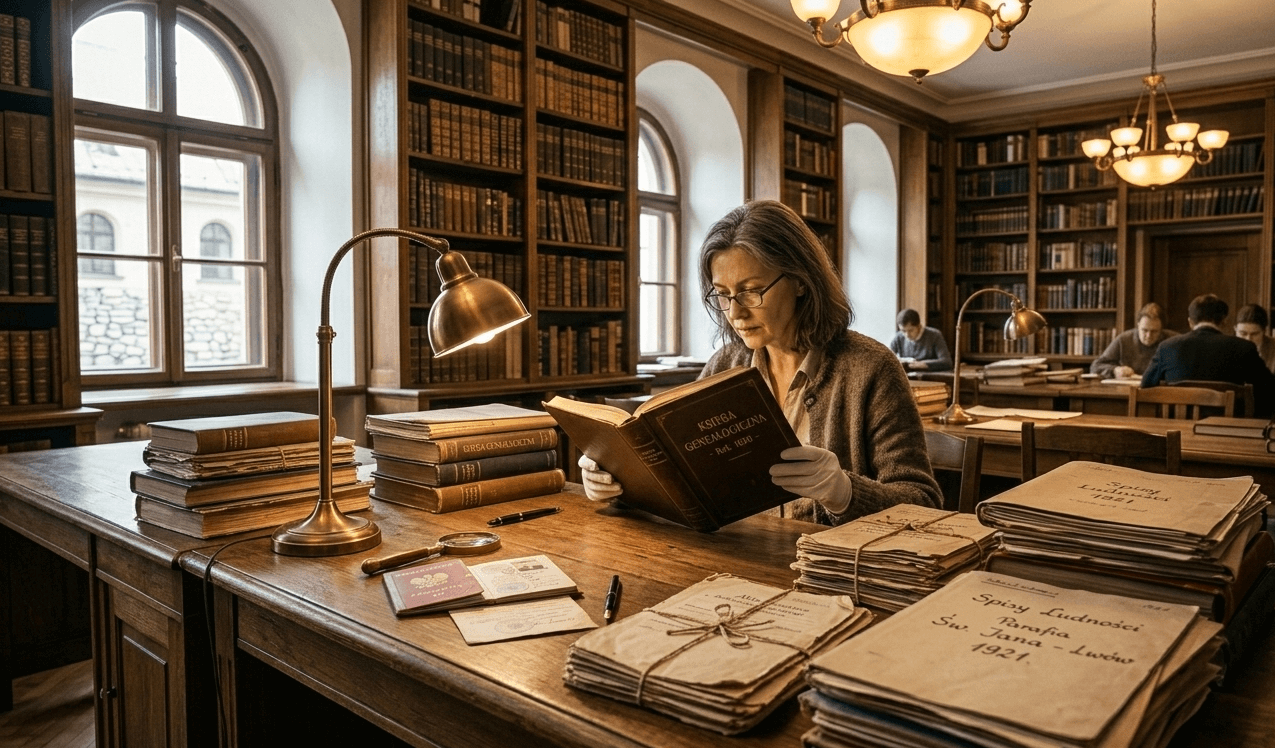
For many applicants, the biggest challenge is not the application itself but locating the documents required to prove their ancestry. Historical records are often scattered across archives and civil offices.
If you are unsure how to locate the historical documents needed to confirm Polish citizenship, professional genealogy researchers can assist with archival searches and document retrieval.
Drevo Research specializes in Eastern European genealogical research and helps families locate historical records needed for citizenship confirmation.